When choosing bottled water, many people feel confused. Some labels say spring water, while others say mineral water. Both come from underground sources, but they are not the same. Many people wonder which one is healthier, which tastes better, and which is better for daily hydration. Understanding mineral water vs spring water helps you choose the right water for your lifestyle.
The difference usually comes down to mineral content, regulations, taste, and processing. Both types of water can support hydration, but they serve slightly different needs.
Join Inland Springs to learn the differences between mineral water and spring water so you can decide which option works best for you and your family.
Mineral Water vs Spring Water: What Is the Difference?
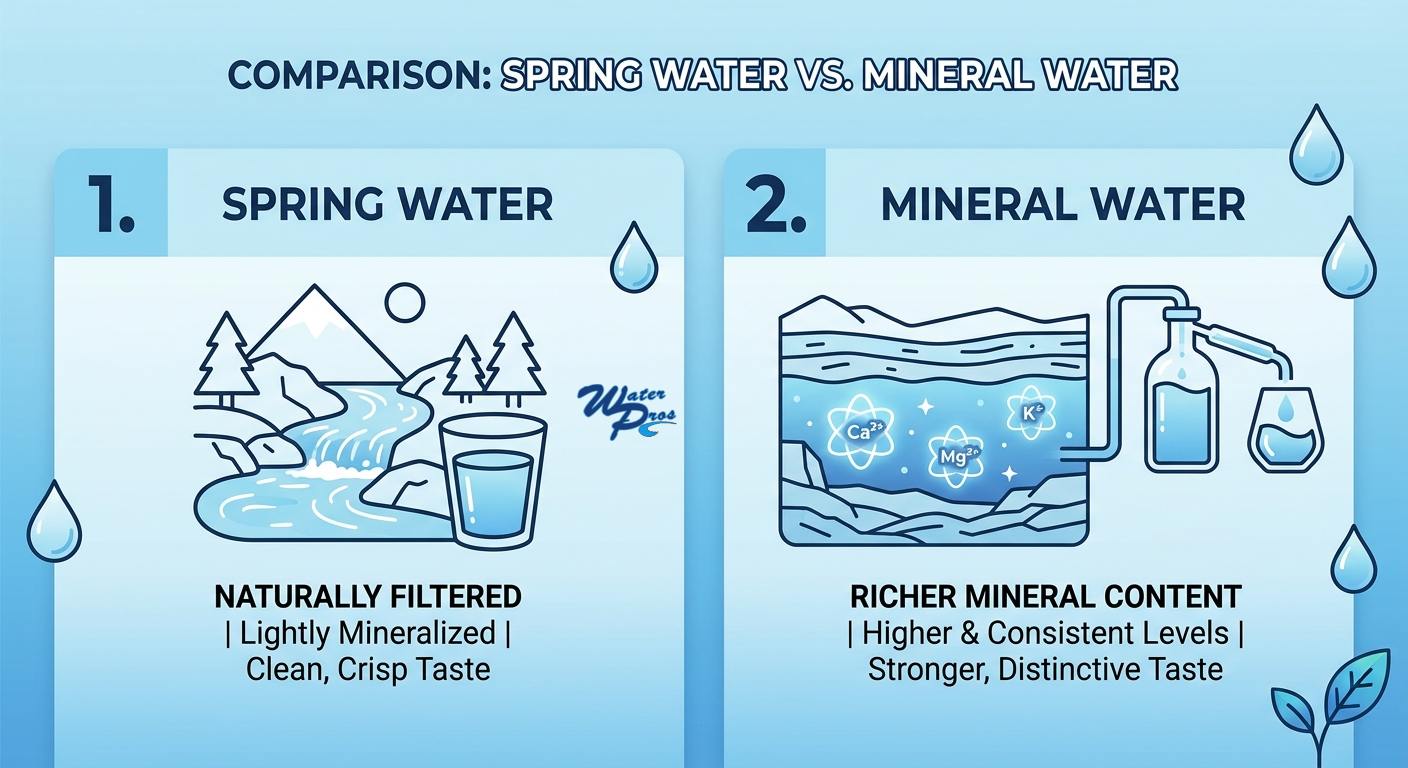
When comparing the differences between spring water vs mineral, remember that the main difference lies in the amount of minerals in the water and how strictly those minerals are regulated. Both come from underground sources, but mineral water contains a consistent and higher level of dissolved minerals.
Spring Water
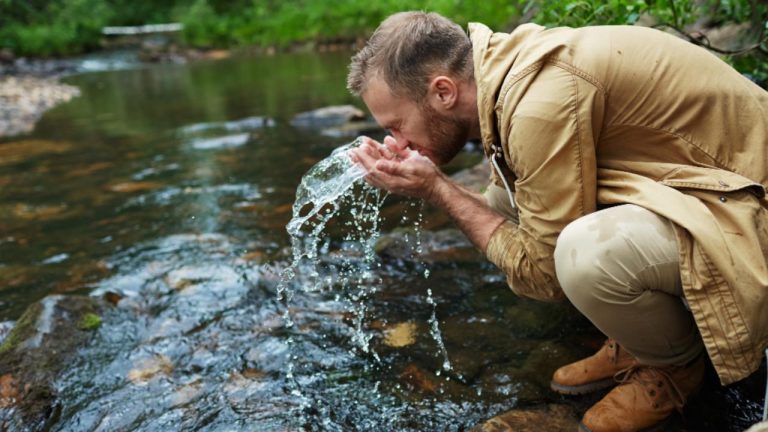
Spring water comes from natural underground springs where groundwater flows to the surface. As the water travels through layers of rock, sand, and soil, it undergoes natural filtration. Here are the key characteristics of natural spring water:
Mineral Content
Spring water contains natural minerals such as calcium, magnesium, potassium, and bicarbonate. However, the mineral levels may vary depending on the location of the spring.
Regulations
Spring water must come directly from the spring or from a borehole that taps the same underground source. Regulations require that the water maintains its natural composition.
Processing
Spring water in Gainesville, GA, usually receives minimal processing. It may undergo filtration to remove particles or harmful microorganisms, but the goal is to preserve the natural quality of the water.
Taste
Because it contains natural minerals, spring water often has a clean and slightly crisp taste. The flavor may change slightly depending on the natural mineral balance.
Bottling
Spring water is typically bottled at or near the spring source to protect purity and maintain its natural composition.
Usage
Many people choose spring water for daily drinking and hydration because it offers natural minerals and refreshing taste.
When choosing between mineral water vs spring water, remember that spring water is often preferred by people who want water that feels natural and lightly mineralized.
Mineral Water
Mineral water also comes from protected underground water sources, but it contains a higher and more stable level of dissolved minerals. Here are the key characteristics of natural mineral water:
Mineral Content
Mineral water is naturally rich in minerals such as calcium, magnesium, sodium, potassium, and bicarbonate. These minerals remain stable and must meet specific standards.
Regulations
To qualify as mineral water, the mineral content must stay consistent at the source. In many regions, regulations require that mineral water cannot be heavily altered.
Processing
Mineral water usually undergoes very limited treatment. Only processes that remove unstable elements, such as iron or sulfur, are allowed while maintaining mineral balance.
Taste
Because mineral water contains higher mineral levels, it often has a stronger or more distinctive taste. Some people describe the taste as slightly salty or earthy.
Bottling
Mineral water is usually bottled directly at the source to preserve its mineral composition and natural quality.
Usage
People often drink mineral water to increase mineral intake or support hydration during physical activity.
When comparing mineral water vs spring water, remember that mineral water stands out because of its higher mineral concentration and distinctive taste.
Mineral Water vs Spring Water: Differences in a Nutshell
| Feature | Spring Water | Mineral Water |
| Source | Natural underground spring | Protected underground mineral source |
| Mineral Content | Contains natural minerals but varies | High and consistent mineral levels |
| Taste | Light, clean, refreshing | Stronger mineral taste |
| Processing | Minimal filtration | Very limited treatment |
| Bottling | Bottled at or near the source | Bottled at the source |
| Typical Use | Everyday hydration | Mineral intake and hydration |
Both types of water originate from underground, protected sources and are generally safe to drink, often undergoing similar, minimal treatment to remove impurities.
If you want clean, natural water delivery services in Gainesville, GA, to your home or office, Inland Springs provides reliable water delivery services backed by a 5-star Google rating.
Nutritional Comparison: Spring Water vs. Mineral Water
When evaluating the differences between mineral water vs spring water, remember that mineral content is one of the biggest differences. Mineral water typically contains higher levels of dissolved minerals.
| Mineral | Typical Amount in Spring Water | Typical Amount in Mineral Water |
| Calcium | 5–50 mg/L | 50–200 mg/L |
| Magnesium | 1–20 mg/L | 10–100 mg/L |
| Sodium | 5–30 mg/L | 10–100 mg/L |
| Potassium | 1–10 mg/L | 5–20 mg/L |
| Bicarbonate | 50–250 mg/L | 200–600 mg/L |
Because mineral water contains higher mineral levels, it may contribute small amounts of daily mineral intake.
Which One Is Right for You?
Choosing between mineral water vs spring water depends on your taste preference and hydration goals.
Choose spring water when:
- You prefer light and refreshing taste.
- You want natural water with balanced minerals.
- You want water for daily hydration.
- You prefer water with a mild flavor.
- You want a natural source with minimal processing.
Choose mineral water when:
- You want higher mineral intake.
- You prefer a stronger mineral taste.
- You want electrolytes during exercise.
- You want water rich in calcium or magnesium.
- You enjoy sparkling or mineral-rich beverages.
Is Spring Water Better for You Than Mineral Water?
Neither option is universally better. In the mineral water vs spring water comparison, both can support healthy hydration. Spring water offers a lighter taste and balanced minerals, which many people prefer for everyday drinking. Mineral water contains higher levels of minerals such as calcium and magnesium, which may contribute small nutritional benefits. The best choice depends on your taste preference, mineral needs, and daily hydration habits.
Bottom Line
The debate around mineral water vs spring water often comes down to personal preference. Spring water provides natural minerals and a fresh taste that many people enjoy every day. Mineral water offers higher mineral content and a stronger flavor that some people prefer.
Founded by Phil Allison, Inland Springs was built on a simple mission: provide families and businesses with a trusted source of natural spring water and professional delivery solutions.
Call 770-534-7873 to learn about water delivery services and current pricing.
- Business hours: Monday–Friday, 8:00 AM – 5:00 PM.
- Mailing address: P.O. Box 748, Murrayville, GA 30548.
Contact Inland Springs today and learn about our water delivery prices in Gainesville, GA.
FAQs
What is better for you, spring water or mineral water?
Both are healthy choices. Spring water offers balanced minerals, while mineral water contains higher mineral levels.
Can mineral water help with muscle cramps?
Yes. Mineral water may help because it often contains magnesium and calcium, which support muscle function.
Does mineral water or spring water have a longer shelf life?
Both have similar shelf life when sealed properly and stored in a cool, dark place.
Can I drink mineral water every day?
Yes. Most people can safely drink mineral water daily unless advised otherwise by a doctor.