What is the Best Drinking Water for Pregnant Women?

Best Water for Pregnant Women to Drink
Pregnant women need water that is safe, clean, and easy for the body to absorb. Below is a list of safe drinking water for pregnancy:
Purified Water
Purified water is filtered to remove contaminants, chemicals, and harmful bacteria. It is a safe option during pregnancy, especially for women who want clean and simple hydration. It is gentle on the stomach and reduces exposure to unwanted substances. Pregnant women can drink purified water daily as their main hydration source.
Mineral Water
Mineral water is one of the best drinking water for pregnant women. It contains natural electrolytes like calcium, magnesium, and potassium. It supports hydration, muscle function, and energy levels during pregnancy. It also helps replace minerals lost through daily activity and sweating. It can be consumed daily in balanced amounts as part of a healthy pregnancy diet.
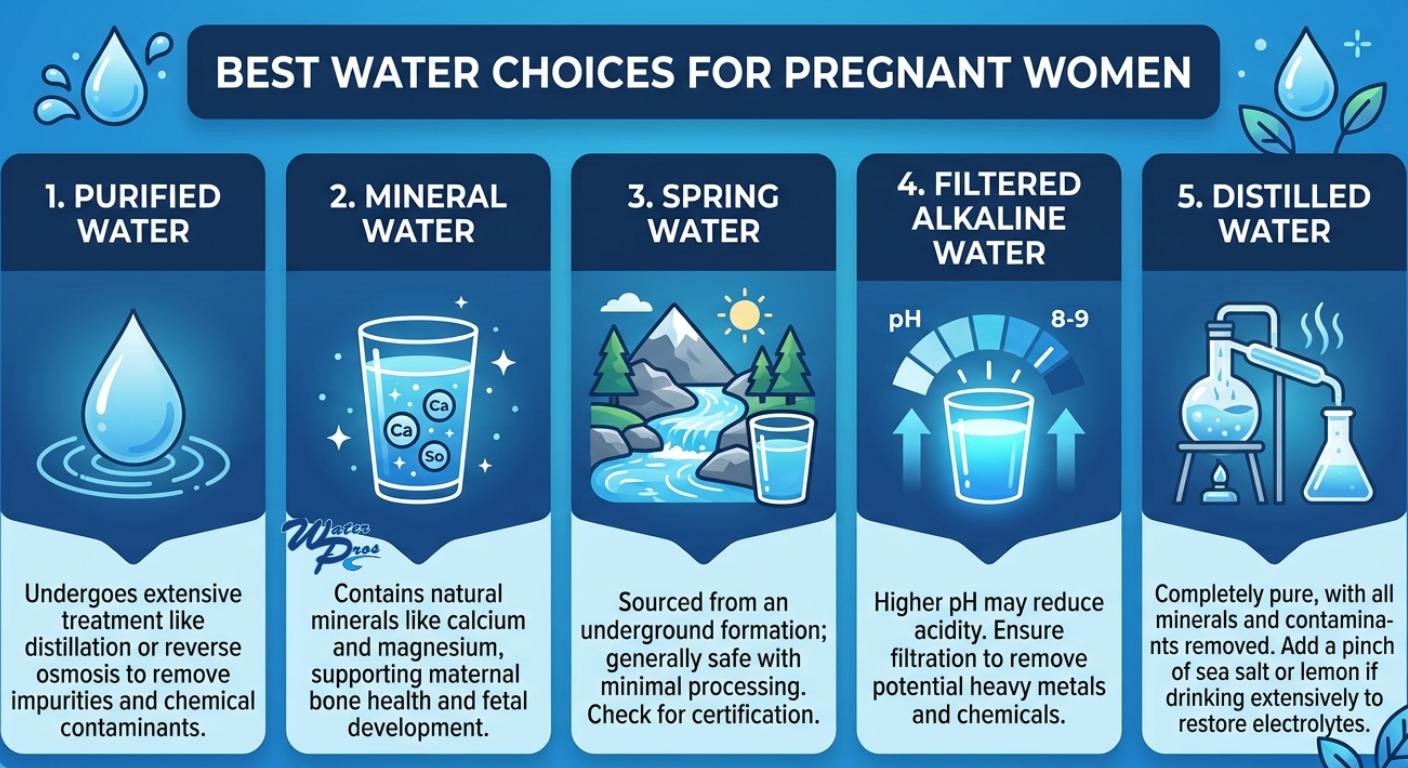
Filtered Alkaline Water
Alkaline water has a higher pH level and may help reduce acidity in the body. Some pregnant women prefer it for better taste and gentle digestion support. It may also help with mild heartburn, which is common during pregnancy. It is best used in moderation alongside other clean water sources.
Tap Water (Filtered)
Tap water is treated for public safety, but quality can vary by location. When filtered properly at home, it becomes safer and cleaner. Filtered tap water can be a budget-friendly hydration option during pregnancy. It is important to use a good-quality filter to reduce contaminants. It can be used daily if properly filtered and tested.
Spring Water
Spring water comes from natural underground sources and often contains healthy minerals like calcium and magnesium. It is a great choice because it supports bone development in the baby and helps maintain hydration balance in the mother. Many pregnant women also find it refreshing and easy to drink throughout the day. It is safe for daily use, and pregnant women can drink small amounts regularly, aiming for steady hydration all day.
For safe and consistent hydration during pregnancy, many families choose our natural spring water delivery services in Gainesville, GA, to support daily health and wellness.
Distilled Water
Distilled water is boiled and condensed back into liquid, removing almost all minerals and impurities. It is very clean but contains no natural minerals, so it is usually not the best long-term choice for pregnancy hydration alone. It is safe occasionally, but should be balanced with mineral-rich foods or water.
Electrolyte Water
Electrolyte water contains added minerals like sodium, potassium, and magnesium. It helps the body stay hydrated more effectively, especially during heat, morning sickness, or fatigue. It supports fluid balance and energy levels. It is useful during pregnancy, but should not fully replace plain water every day.
Drinking Water During Pregnancy: How Much is Enough?
On average, the recommended daily water intake for pregnant women is about 2.3 to 3 liters (8–12 cups) of water per day. Needs may increase in hot weather or during physical activity.
| Daily Water Intake | |
| First Trimester | 2.0–2.3 liters |
| Second Trimester | 2.3–2.7 liters |
| Third Trimester | 2.5–3.0 liters |
Factors that affect individual water needs include:
- Body weight
- Activity level
- Weather and temperature
- Diet (salty or dry foods increase need)
- Morning sickness or vomiting
- Doctor recommendations
Benefits of Drinking Water During Pregnancy
Good hydration supports both mother and baby throughout pregnancy. It:
- Supports baby’s growth and development.
- Helps form amniotic fluid.
- Improves blood circulation.
- Reduces fatigue and dizziness.
- Helps prevent constipation.
- Lowers the risk of urinary tract infections.
- Supports healthy skin and temperature control.
Tips To Help You Drink More Water During Pregnancy
Staying hydrated is easier with small daily habits:
- Supports baby’s healthy growth and development.
- Helps form and maintain amniotic fluid levels.
- Improves blood circulation for mother and baby.
- Reduces fatigue, dizziness, and feelings of low energy.
- Helps prevent constipation and digestive discomfort.
- Lowers risk of urinary tract infections (UTIs).
- Supports healthy skin and regulates body temperature.
Effects of Drinking Too Much Water During Pregnancy
Drinking too much water is rare but possible. Usually, more than 4–5 liters per day without a medical reason may cause an imbalance in electrolytes. It can lead to symptoms like nausea, headache, or low sodium levels in the blood. This condition can be serious if ignored, so balance is important. Always follow your doctor’s advice for safe hydration levels.
Best Drinking Water for Pregnant Women in Gainesville, GA
At Inland Springs, we provide clean, fresh, and reliable water options that support safe hydration during pregnancy. Our water is carefully sourced and delivered to help families maintain healthy daily hydration without stress.
Our water delivery company in Gainesville, GA, offers:
- Natural spring water with essential minerals
- Purified drinking water for clean hydration
- Reliable home and business delivery service
Our service makes it easy for pregnant women to stay hydrated without heavy lifting or store trips. We focus on quality, safety, and consistency.
Schedule spring water delivery for your home or business today:
- Call us at 770-534-7873
- Visit us at P.O. Box 748, Murrayville, GA 30564
We operate Monday to Friday, from 8:00 AM – 5:00 PM.
FAQs
What is the best drinking water for pregnant women at night?
The best option is clean spring or purified water in small amounts to avoid frequent nighttime bathroom trips.
Which water is good for pregnant women?
Spring water, purified water, mineral water, and filtered alkaline water are all safe choices.
How important is drinking water during pregnancy?
It is very important because it supports baby growth, blood flow, and prevents dehydration.
What water can pregnant women drink?
Pregnant women can drink clean bottled water, spring water, purified water, and mineral water.
Can pregnant women drink baking soda water for heartburn?
It is not recommended regularly. Always ask a doctor before using baking soda water during pregnancy.
Is drinking cold water good for pregnant women?
Yes, cold water is safe and can help reduce nausea and improve hydration comfort.
Is drinking hot water good for pregnant women?
Yes, warm or hot water is safe and may help digestion and relaxation.
What drinks to avoid during pregnancy?
Avoid alcohol, high-caffeine drinks, unpasteurized juices, and sugary sodas because they can harm hydration, baby development, and overall pregnancy health.