Why Does Spring Water Taste Bad? Causes and What to Check

You pour a glass of spring water expecting something fresh and clean, and the first sip is bitter, metallic, or musty. So you ask yourself: Why does spring water taste bad?
Natural minerals, sulfur or earthy compounds, long storage, a worn bottle, or a dirty cooler can all change the flavor. A mild mineral taste can be normal for spring water, but a sudden change, strong odor, visible particles, or a damaged container deserves more attention.
Why Does Spring Water Taste So Bad, Weird, or Different?
Spring water starts underground. As it moves through rock and soil, it picks up natural minerals and other compounds, and these give each spring its own flavor.
What should spring water taste like? Most people describe the typical taste as clean, smooth, and slightly mineral, sometimes with a faint sweet or crisp finish. It should not taste sharp, sour, or strongly of metal, eggs, soil, or plastic.
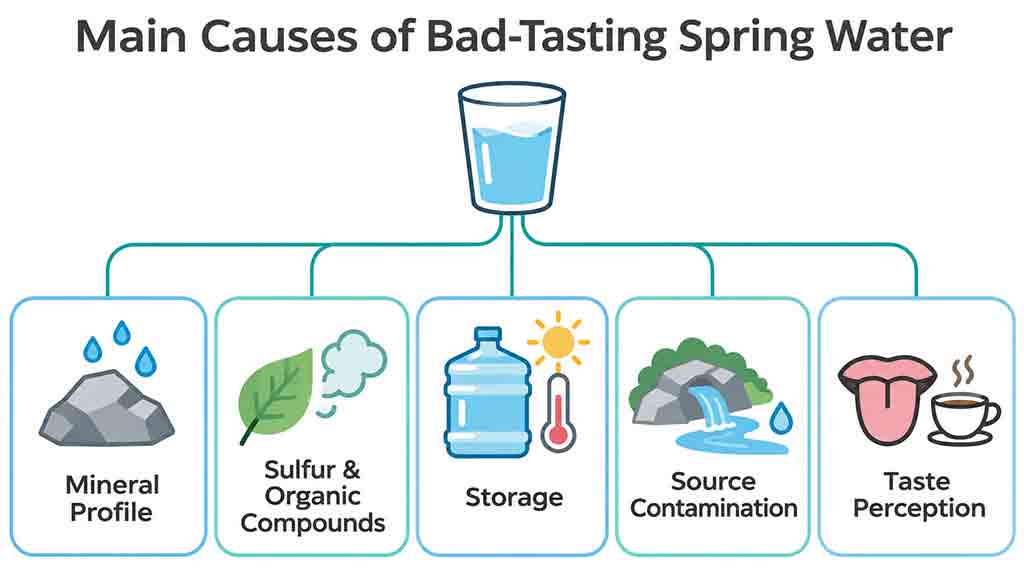
Here are the most common reasons for spring water bad taste:
Natural Minerals Can Create a Strong or Bitter Taste
Spring water can hold calcium, magnesium, sodium, iron, and manganese, and each one can shift the flavor:
- Magnesium may add a bitter note.
- Calcium and magnesium can make water taste chalky or heavy.
- Sodium can taste salty, and iron often brings a metallic edge.
- Iron can make water taste unpleasant, and a high level of dissolved solids can taste salty (USGS).
No two springs have the same mineral mix, so one brand can taste very different from another. Taste also cannot tell you which mineral is in the water or how much.
Sulfur Compounds and Natural Organic Matter
Hydrogen sulfide is a gas that smells like rotten eggs. It can form when groundwater moves through rock or plant material underground, and it can give water a sulfur smell and a bad taste (U.S. Geological Survey).
Earthy or musty notes have a different cause. Natural compounds such as geosmin and MIB form when plant material breaks down, and they can make water taste like soil or a damp basement.
These are two separate problems, so not every odor comes from bacteria. Taste cannot name a specific organism, and no one should assume the microbes in natural water are harmless.
Odor Pickup During Storage
Why does spring water taste bad? Because water can change after it leaves the source. A jug that stays open, sits in a warm room, sits in the sun, or sits near strong smells such as gasoline or cleaning products may taste stale or off.
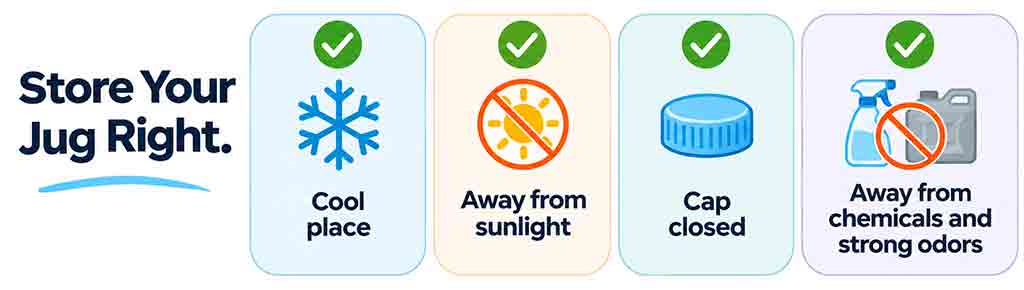
You need to keep the cap closed and store the water in a cool, clean place away from direct sunlight (CDC). Keep jugs away from paint, fuel, and other chemicals too, because a container can take on nearby smells.
The Bottle, Cap, or Water Cooler
- A plastic, rubbery, or medicinal taste can come from the bottle, the cap, a storage spot with strong odors, or parts inside a water cooler.
- A dirty reservoir, spigot, or other wet part inside the cooler can also change taste and smell.
A plastic taste does not prove that chemicals have leached into the water, but it is a good reason to check the jug and the place you keep it.
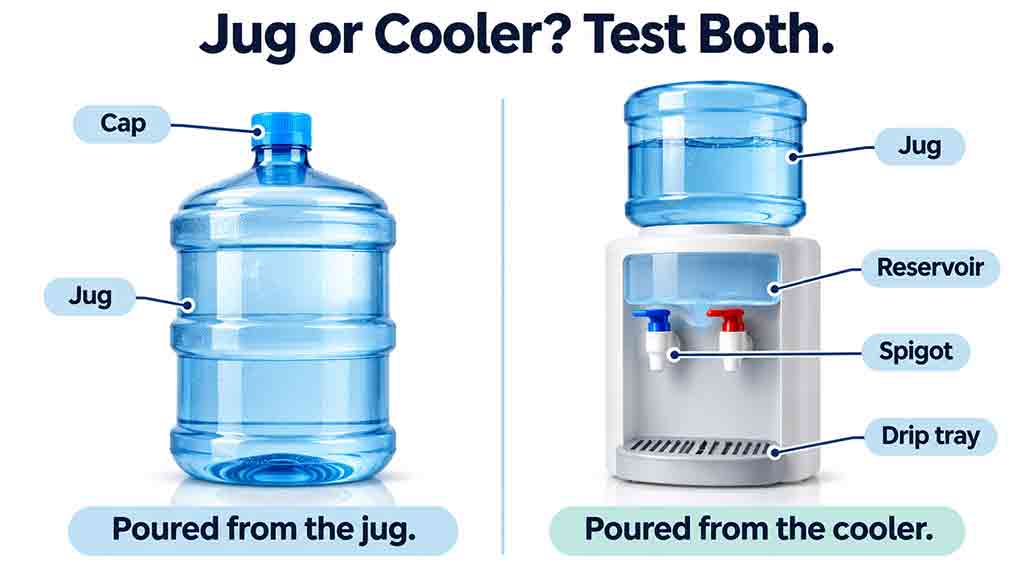
Try a simple test. Pour one glass straight from a fresh jug and one from the cooler. If the jug glass tastes normal and the cooler glass does not, inspect and clean your water cooler.
Source Contamination or Runoff
An underground spring can be affected by nearby runoff, septic problems, or other pollution. That risk matters most for an untreated outdoor spring, not for commercially bottled water. A spring that looks clear and natural is not automatically safe to drink.
Bottled spring water follows stricter rules. Bottlers must protect their water sources, test both the source water and the finished product, and process, bottle, and ship the water under sanitary conditions (FDA bottled water rules). A strange taste does not always point to contamination, but it should not be brushed off as harmless either.
Recent Foods and Drinks You Had
Your mouth plays a part too. After coffee, mint, salty snacks, or bitter foods, plain water can taste different from how it did before. Some people also notice mineral or earthy notes more than others do. This is a smaller factor, and it does not explain a strong odor, a cloudy look, or visible particles.
What Does the Taste of Spring Water Tell You?
A certain flavor or a lingering aftertaste can point you toward the likely cause. It cannot confirm the exact substance, and it cannot prove the water is safe.
The table below can help you answer the question “Why does spring water taste bad?” based on the taste or smell:
| Taste or smell | Possible explanation | What to check next |
| Metallic, like pennies | Iron or manganese in the source, or copper or iron from fittings or equipment | Look for stains, compare a fresh jug with cooler water, and call your supplier if the taste stays |
| Bitter | Mineral makeup, including magnesium, or other dissolved substances | Compare with a fresh sealed bottle and ask the supplier about the source. Do not guess a mineral level by taste |
| Salty or chalky | Sodium, calcium, magnesium, hardness, or a higher level of dissolved solids | Check the label or quality information and ask the supplier for mineral details |
| Rotten egg or sulfur | Hydrogen sulfide or related sulfur compounds | Do not dismiss a strong or new smell. Stop drinking the water until your supplier or health department advises you |
| Earthy or musty | Geosmin, MIB, or other natural organic compounds | Taste a fresh sealed bottle, and ask the supplier about the source or batch |
| Plastic, rubbery, or medicinal | The bottle, cap, storage spot, cooler parts, or a treatment taste | Check the jug, nearby odors, and storage, and see if the taste shows up only from the cooler |
| Chlorine or pool-like | A treatment taste, more common in treated tap water | Check the label and ask the supplier how the water is treated. Do not assume all spring water has chlorine |
| Sour, sharp, or unusually flat | A pH or mineral difference, or the way your mouth senses it | Do not guess pH by taste. Ask for quality information if the change lasts |
Why Does Spring Water Taste Different in a 5-Gallon Jug?
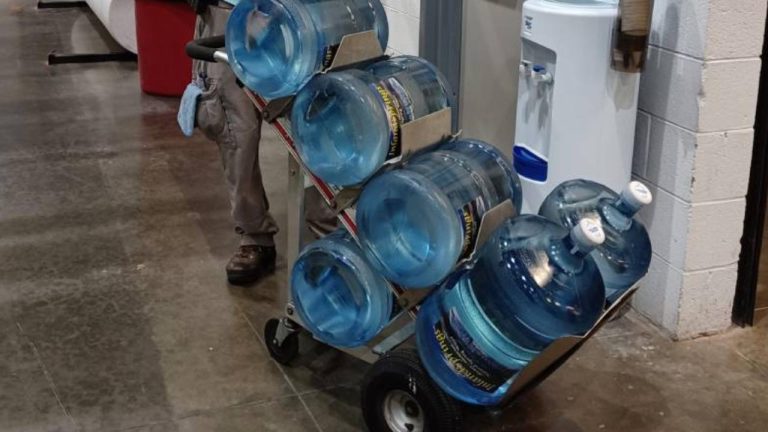
A 5-gallon jug often stays in use longer than a small bottle, and the water may also pass through a cooler. That is why water from a 5-gallon jug can taste bad even when a small bottle of the same water tastes fine. Dissolved minerals do not sink to the bottom like sand, so they are rarely the reason. Storage, temperature, jug condition, handling, and cooler cleanliness are better places to start.
Age, Temperature, and Storage
Water that sits open, or sits in a warm or sunny spot, may pick up an unwanted taste or smell. Keep the cap closed and store the jug in a cool, clean place away from chemicals and strong odors. If the taste changed after a long wait, compare it with a fresh sealed jug.
Is the Taste Coming From the Jug or the Cooler?
A side-by-side test is the quickest way to find the source. Use two clean glasses.
- Pour a small sample straight from the jug into the first glass.
- Pour a second sample from the cooler into the other glass.
- If only the cooler sample tastes odd, inspect the reservoir, spigot, drip tray, and any other part that touches water.
- Clean the cooler by the maker’s directions, ideally every one to three months or when you change the jug (Mass.gov).
- Do not mix cleaning products, and rinse well so no cleaner stays behind.
- If both samples taste off, stop using that jug and contact your supplier.
Is Bad-Tasting Spring Water Safe to Drink?
Taste and smell are not reliable safety tests. Some contaminants have no taste, smell, or color, and some harmless minerals taste strong. Commercially bottled spring water is regulated by the FDA and must meet quality and sanitary production rules.
An untreated outdoor spring is a different matter, and no one should assume it is safe without testing or treatment. Bottled water can also pick up problems during shipping, during storage, or after you buy it (CDC).
Do not drink water from a damaged or unsealed container, water with unexplained particles or discoloration, or water with a strong sewage, fuel, solvent, or chemical smell until someone checks it.
If you think bottled water made you sick, contact a healthcare professional and report it to your local health department.
How to Improve the Taste of Spring Water
These steps work best when the water looks normal, and you have no safety concern:
- Pour a fresh sample into a clean glass. A glass with soap, food, or drink residue can fool your taste.
- Chill the water. Cold water can make some flavors and smells less noticeable, but it does not remove contaminants.
- Check the seal, cap, and jug. Do not use a damaged or unsealed jug.
- Store the jug in a cool, clean place away from sunlight, heat, gasoline, cleaning products, and strong odors.
- Clean your cooler by the maker’s directions, and make sure no cleaning solution stays behind.
If the taste is still odd, stop using that jug and contact your supplier. Do not try to hide a strong off-flavor with flavor drops, boiling, or a filter you have not checked.
Get Spring Water Delivery from Inland Springs Water Pros
At Inland Springs Water Pros, we deliver 5-gallon jugs of natural spring water in Gainesville, GA, and we clean and sanitize each reusable jug before it goes back out. If you prefer a milder, more neutral taste, we also offer a filtered water cooler, and the difference between them often comes down to taste.
We deliver to homes and offices in Murrayville, Gainesville, Buford, Cumming, Flowery Branch, Dawsonville, Lula, Cleveland, Dahlonega, and Clermont.
Call us at 770-534-7873 or contact Inland Springs Water Pros to ask about a specific jug or request a quote.
Frequently Asked Questions
Why does spring water taste bad in the morning?
Water that sits overnight in a warm room, an open glass, or a cooler can taste stale. Morning mouth can also change how water tastes.
Is spring water actually better for you?
Not clearly. Safe drinking water hydrates you just as well. Spring water’s minerals vary by source, so the choice mostly comes down to taste.
Why does spring water taste weird to me?
Its natural minerals may differ from what you are used to. Recent food, long storage, or a dirty cooler can also change the taste.
Why does natural spring water taste bad?
Natural springs pick up minerals and compounds from rock and soil, such as iron or sulfur. These can taste metallic, bitter, or earthy.
Why does Mountain Valley spring water taste bad?
Each brand’s source has its own mineral mix, so a brand can taste stronger or different than others. Check storage if it seems off.
Why does bottled spring water taste bad?
Minerals from the source, heat, sunlight, a long time on the shelf, or strong nearby odors can change the taste of bottled spring water.
Why does water from a 5-gallon jug taste bad?
A large jug stays in use longer and often feeds a cooler. Check storage time, warmth, jug condition, and cooler cleanliness first.
Why does spring water taste metallic?
Iron or manganese in the source can cause it. Copper or iron from cooler parts can too, so compare a fresh jug with cooler water.
Why does spring water smell like rotten eggs?
Hydrogen sulfide gas can cause a rotten-egg smell. Do not assume it is harmless. If the smell is strong or new, contact your supplier.
Why does spring water taste bitter or salty?
Different minerals change flavor. Magnesium may taste bitter, and sodium may taste salty, but taste alone cannot tell you which mineral or how much.
Can spring water go bad after opening?
Yes. Opened water loses freshness and picks up odors, especially if warm or uncovered; how long bottled spring water lasts depends on storage.
Can a dirty water cooler change the taste of spring water?
Yes. A dirty reservoir or spigot can change taste and smell, so clean your water cooler on a regular schedule using the manufacturer’s directions.