Is Spring Water Good for Plants?

Choosing the right water for your plants can be confusing. Tap water may contain added disinfectants and minerals, while purified water may seem unnecessary for everyday watering. So, is spring water good for plants?
Yes, spring water is good for most houseplants and garden plants. It carries a small amount of natural minerals, and most plants handle that well. Carnivorous plants are the exception because they need water with very few minerals. If you see white crust or brown leaf tips, check the mineral content on the label.
Here is how the four common waters compare for plants:
| Water Type | What is in It | Best for | Watch for |
| Tap water | Chlorine or chloramine, plus minerals that vary by city | Most houseplants, herbs, and garden plants | May cause brown tips on sensitive plants. Letting it sit removes chlorine, but not chloramine or fluoride. |
| Distilled water | Almost no minerals | Carnivorous and mineral-sensitive plants | Other plants need regular fertilizer. More expensive for frequent use. |
| Spring water | Natural minerals that vary by source and brand | Most houseplants, herbs, and garden plants | Heavy use may leave white crust. Avoid carnivorous plants. Check the mineral content. |
| Rainwater | Very few minerals; slightly acidic | Nearly all plants, including sensitive plants | Can pick up dirt from roofs, gutters, and containers. Use clean rainwater. |
Why Is Spring Water Good for Plants? Benefits and Drawbacks
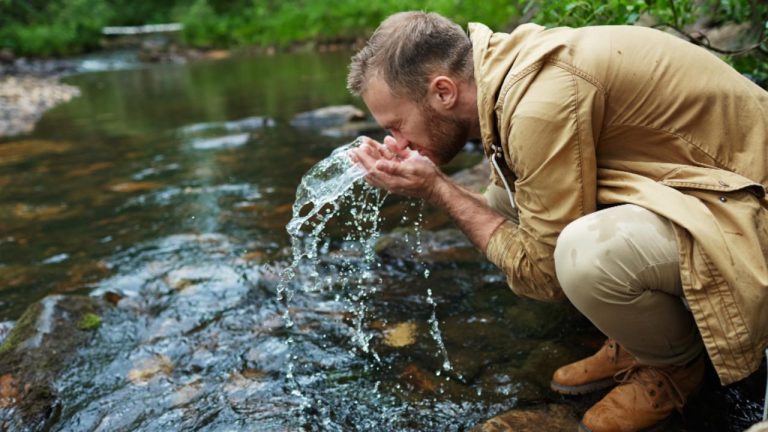
Spring water is good for most plants because it contains small amounts of natural minerals and usually does not have the chlorine or chloramine commonly used to treat city tap water. This can make it a gentler choice for houseplants, herbs, and garden plants, especially when tap water is hard, salty, or heavily chlorinated.
Spring water comes from an underground formation where water flows naturally to the surface, and bottlers may collect it at the spring or through a borehole into that formation (FDA). Its mineral content is not fixed, so mineral levels can vary by source and brand.
Benefits
- Often contains small amounts of calcium, magnesium, and potassium, depending on the source and brand.
- Usually does not contain chlorine or chloramine.
- Works well when tap water is hard, salty, or heavily chlorinated.
- Can help determine if tap water is causing brown leaf tips.
Drawbacks
- Costs more when used for many plants.
- Can leave white mineral buildup on soil and pots.
- Mineral, sodium, and fluoride levels vary by brand.
- Is not suitable for carnivorous plants and some mineral-sensitive plants.
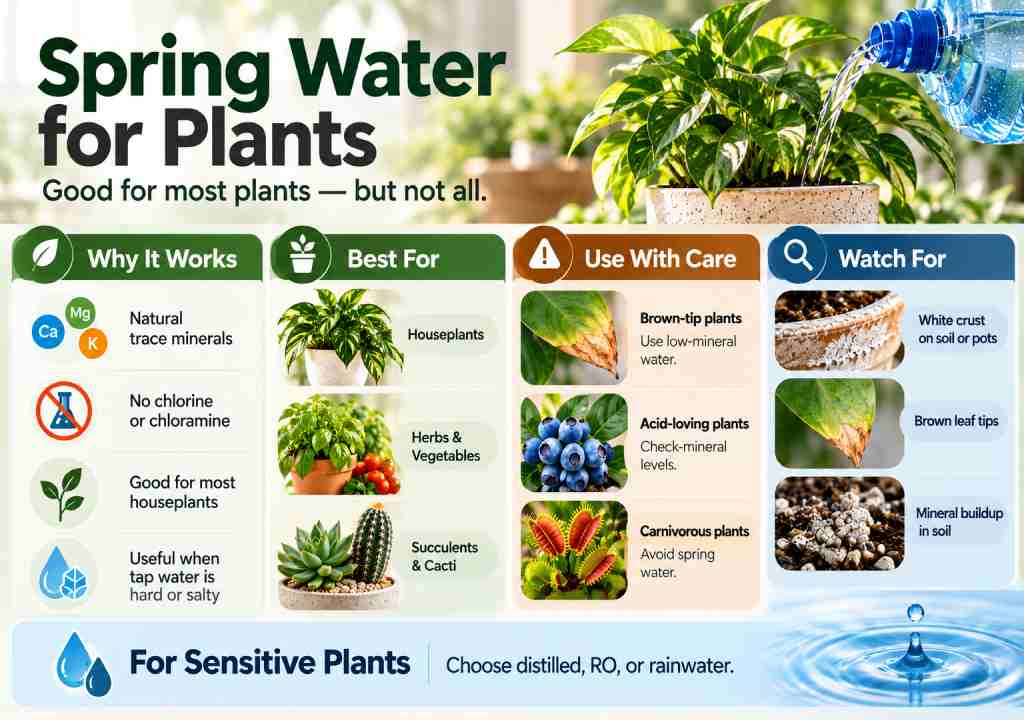
Which Plants Like Spring Water, and Which Need Something Else
Most plants in a home or garden do fine with spring water. The table shows where to be careful:
| Plant Type | Spring Water? | Better Choice If Needed | Why |
| Most houseplants (pothos, monstera, snake plant) | Yes | Tap water that has sat out | Most tolerate spring or tap water. Rinse the soil if white crust forms. |
| Potted herbs and vegetables | Yes | Rainwater | Small amounts of minerals are fine. Watch for mineral buildup. |
| Succulents and cacti | Yes | Regular tap water | Less frequent watering means slower salt buildup. |
| Spider plant, dracaena, calathea, prayer plant | Usually, if low in minerals | Rainwater or distilled water | Fluoride, chlorine, and salts may cause brown tips. |
| Carnivorous plants | No | Distilled, RO, or rainwater | They need water with very few minerals. |
| Blueberries and other acid-loving plants | Check mineral level | Rainwater or low-mineral water | Blueberries are salt-sensitive. Irrigation guidance lists dissolved-solid limits around 250–640 ppm. |
Is Spring Water Good for Indoor Plants?
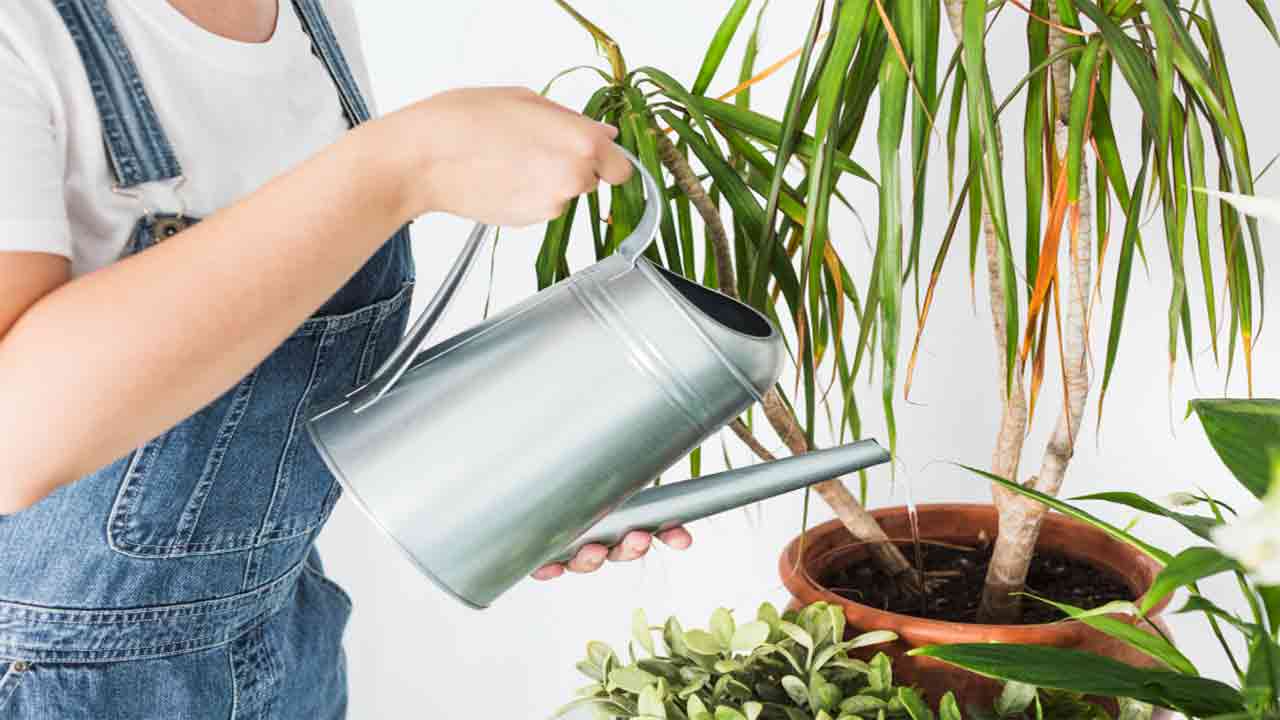
Yes, spring water is good for most indoor plants, including foliage plants, herbs, and succulents. Minerals can build up in indoor pots over time, so watch for white crust on the soil or pot rim. If it appears, rinse the soil with rainwater or distilled water and let excess water drain from the pot.
Can I Use Spring Water on Carnivorous Plants?
No. Spring water is not recommended for carnivorous plants such as Venus flytraps, pitcher plants, and sundews. They need water with very few minerals (U.S. Botanic Garden). Use distilled water, reverse osmosis water, or clean rainwater instead. Minerals in spring water can build up in the soil and stress these plants.
Plants With Brown Tips
Brown leaf tips can result from chlorine, fluoride, or salt buildup in the soil (Iowa State University Extension). Spring water may help if tap water is the cause, but some spring water also contains minerals and fluoride. If brown tips continue, try rainwater or distilled water for a few waterings. Trimming brown tips improves appearance, but fixing the water issue helps prevent new ones.
Is Bottled Spring Water Good for Plants? Is It Too Mineral-Rich?
Bottled water can be a good choice for plants, but it is not automatically better than tap water. Bottled spring water is fine for most plants. Whether it is too mineral-rich depends on the brand, and you can judge a bottle in a few minutes.
Check these four things:
- Look at the mineral number. Many labels and bottler reports list total dissolved solids (TDS), which is the amount of minerals and salts in the water. A lower number means fewer minerals.
- Look for the word mineral. Mineral water must have at least 250 parts per million (ppm) of total dissolved solids, so skip it for sensitive plants.
- Look for white crust. A pale crust on the soil or around the pot rim is a sign of mineral build-up.
- Look for brown leaf tips. These can point to salts, chlorine, or fluoride in the water.
If you see crust, water the soil well with rainwater or distilled water to rinse out extra minerals, then go back to your usual routine.
The best bottled water for plants is one that lists a low mineral content, and the best bottled spring water for plants is one with a mineral number you can read on the label. In many places, tap water works just as well.
Is Distilled Water Good for Plants?
Yes, distilled water is safe for plants. Distilled water is made by boiling water and collecting the steam, which leaves most of the minerals behind. It has almost no minerals, which makes it a good match for carnivorous plants and other mineral-sensitive plants. Other plants can use it too, as long as they also get fertilizer as directed.
When Should You Use Distilled Water for Plants?
Choose distilled water for carnivorous plants such as Venus flytraps, pitcher plants, and sundews. It is also a good pick for orchids and other mineral-sensitive plants, for plants that keep getting brown tips, and for pots where white crust keeps building on the soil. Distilled water and reverse osmosis water are both safe choices for carnivorous plants (Clemson Extension).
Benefits of Using Distilled Water on Plants
- Contains almost no minerals or dissolved substances.
- Helps prevent mineral crust on soil and pots.
- Works well for carnivorous and mineral-sensitive plants.
- Reverse osmosis and other purified water can also provide a low-mineral option.
Drawbacks
- Provides almost no calcium, magnesium, or other nutrients.
- Most plants still need regular fertilizer.
- Costs more than tap water for regular use.
- Does not make plants grow faster on its own.
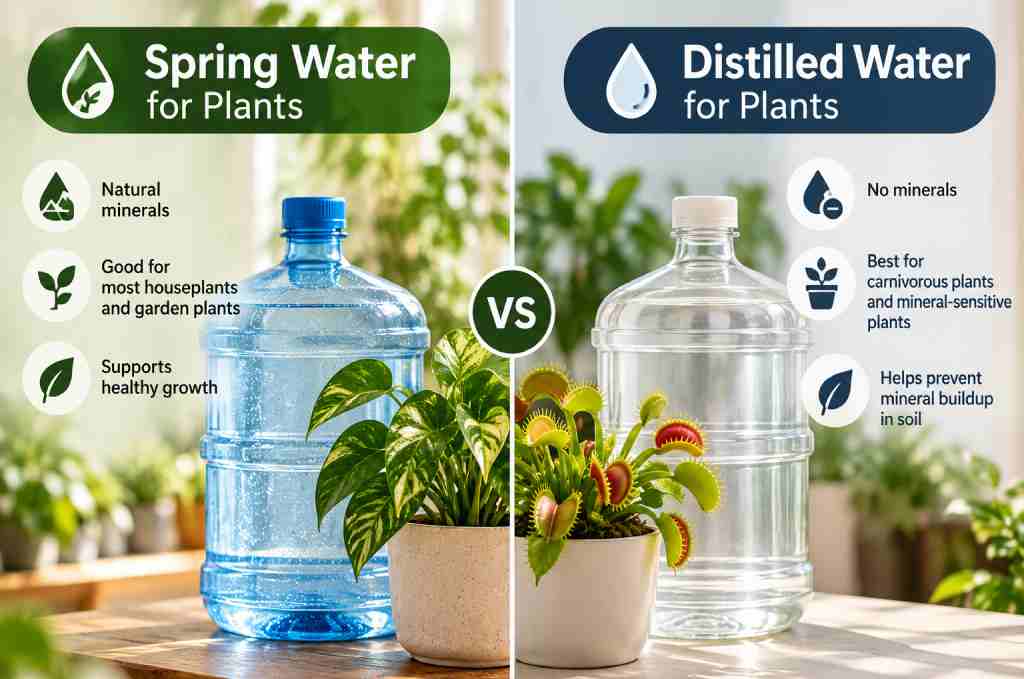
Spring Water vs Distilled Water for Plants
The main difference between spring water and distilled water for plants is mineral content. Spring water contains natural minerals, while distilled water contains almost none.
Spring Water
- Contains natural minerals.
- Works well for most houseplants, herbs, and garden plants.
- May work for brown-tip plants if the mineral level is low.
- Can cause mineral buildup in soil over time.
- Provides small amounts of minerals to plants.
- Works well for regular watering of most plants.
Distilled Water
- Contains almost no minerals.
- Works well for carnivorous and mineral-sensitive plants.
- Is a better choice when brown leaf tips persist.
- Causes very little mineral buildup in soil.
- Provides almost no minerals to plants.
- Requires regular fertilizer for most plants.
For most plants, spring water is fine. Choose distilled water for carnivorous plants or plants that react poorly to minerals. For many common plants, tap water can also work well.
Best Water for Plants
There is no single best water for every plant:
- Rainwater and distilled water suit sensitive plants.
- Spring water and tap water work well for most others.
So the right choice depends on your plant and on what is in your local water.
A Simple Rule Helps: match the water to the plant. Plants that evolved in low-mineral soil, such as carnivorous plants, need low-mineral water. Common houseplants and garden plants are far more forgiving.
Best Water for Houseplants
Tap water or spring water works for most houseplants. Letting tap water sit can reduce chlorine, but not chloramine or fluoride. For plants with persistent brown tips, try rainwater or distilled water. Avoid water from salt-based softeners because sodium can build up in the soil.
Filtered Water for Plants
Filtered water can work for plants, but it depends on the filter. Carbon filters reduce chlorine but may not remove minerals or fluoride. For sensitive plants, use a filter that reduces dissolved solids to very low levels, or choose distilled water or rainwater.
Is Rain Water Good for Plants?
Yes. Rainwater is one of the gentlest waters for plants because it falls with very few minerals. Clean rain is also slightly acidic, with a pH of about 5.6 (University of Georgia), which many plants enjoy.
The main risk is what the rain touches after it falls. Make sure the roof, gutter, and storage container are clean before you collect it, and let it reach room temperature before you water. Cold water can shock the roots of indoor plants.
Is Spring Water the Same as Rain Water?
No, spring water and rainwater are not the same. Rain falls with very few minerals, while spring water comes from underground and carries natural minerals. That is why rainwater suits sensitive plants, and spring water suits most others.
Spring and Distilled Water for Plants in Gainesville and Hall County
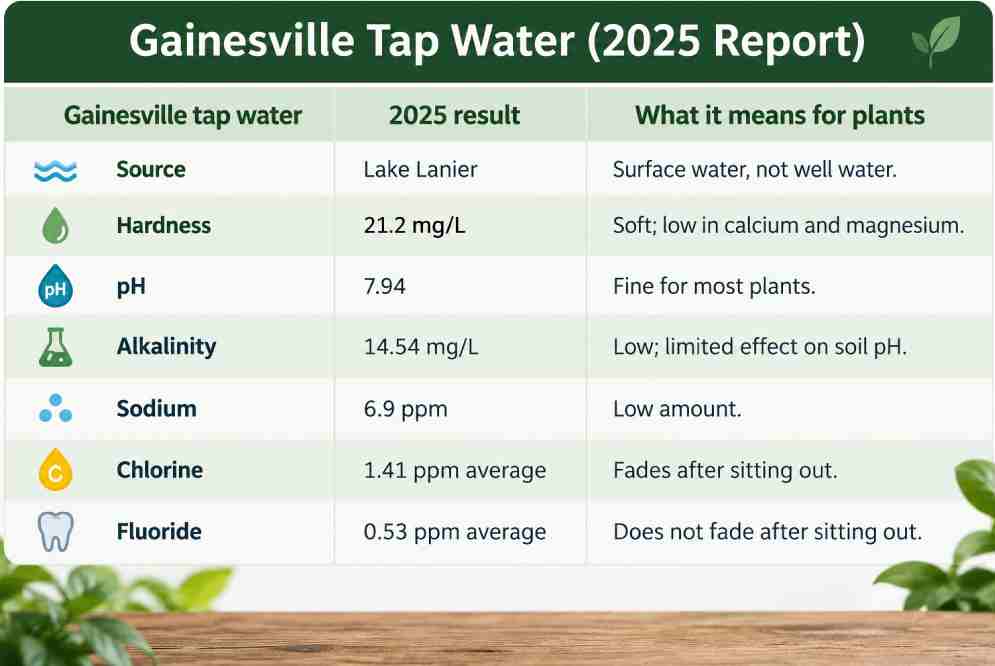
Gainesville tap water is soft, with a reported hardness of about 21 mg/L. It works well for most plants, but it also contains chlorine and added fluoride. Sensitive plants or plants with recurring brown tips may do better with spring or distilled water.
If you want a different water option for your plants, Inland Springs Water Pros provides bottled water delivery in Gainesville and surrounding areas.
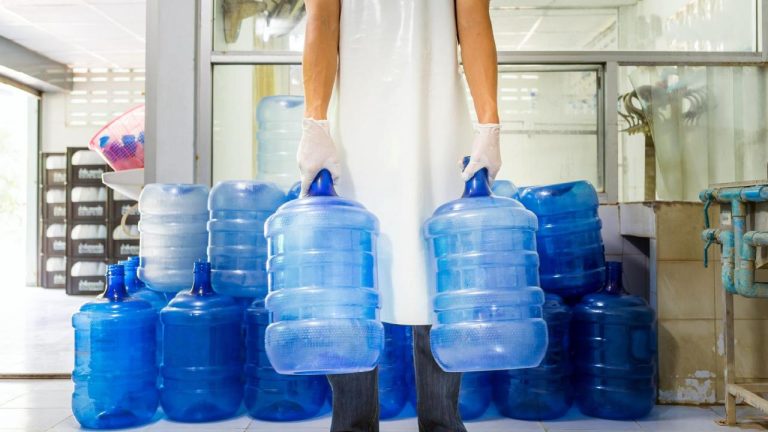
We offer spring water and distilled water in 5-gallon bottles, making it easy to choose the right water for houseplants, garden plants, and mineral-sensitive plants. We deliver to Gainesville, Murrayville, Dahlonega, Cleveland, Clermont, and Lula, GA.
If you would like bottled water for your plants delivered, you can call Inland Springs Water Pros at 770-534-7873 to get delivery pricing whenever you are ready.
Let’s Recap
So, is spring water good for plants? Yes, for most houseplants, herbs, and garden plants. Its natural minerals are generally fine for regular watering. However, carnivorous and mineral-sensitive plants need water with fewer minerals. For these plants, distilled water, reverse osmosis water, or clean rainwater is a better choice.
Frequently Asked Questions
What type of water is best for plants?
Rainwater and distilled water suit sensitive plants. Spring water and tap water that has sat out for a few days work well for most houseplants and garden plants.
Can you use distilled water for plants?
Yes. Distilled water is safe for plants and works well for carnivorous plants. It has almost no minerals, so feed other plants with fertilizer to replace what is missing.
Is natural spring water good for plants?
Yes, for most plants. Natural spring water has a modest amount of minerals, which most houseplants and garden plants handle well. Sensitive plants such as carnivorous plants need low-mineral water.
Is spring water good for houseplants?
Yes. Most indoor plants do well with spring water. If you see white crust on the soil or brown leaf tips, switch to distilled water or rainwater.
Is mineral water good for plants?
Mineral water for plants is rarely ideal. It has at least 250 ppm of dissolved solids, which can build up in soil. Spring or tap water is safer.
Is bottled water good for plants?
Yes, in most cases. Spring and purified bottled water are fine for most plants. Mineral water has more dissolved solids, so check the label first.
Can you water plants with tap water?
Yes, most plants can be watered with tap water. If brown tips or mineral buildup appear, try rainwater or distilled water.
Is it okay to water plants with spring water?
Yes. Spring water is generally safe for plants and can provide naturally occurring minerals. However, mineral levels vary, so sensitive plants may respond differently.