
Can Dogs Drink Spring Water? Safety, Benefits, and Risks

Our dogs are part of the family, and keeping them healthy and hydrated is one of our responsibilities. But can dogs drink spring water? Yes, commercially bottled spring water that is safe for people is generally safe for dogs, too. It contains natural minerals and helps keep them hydrated. However, untreated water from outdoor springs and streams may contain harmful germs and contaminants.
This guide talks about whether spring water for pets is safe and beneficial, the minerals, and the best water for dogs.
Is Spring Water Safe for Dogs?
Spring water is generally safe for healthy dogs when it is commercially bottled, properly stored, meets applicable quality and sanitation standards, and is suitable for human drinking.
Commercially bottled spring water comes from an underground source and is collected at the spring or through a borehole that taps the underground formation feeding the spring.
Its potential benefits for dogs include:
- Helps dogs stay hydrated throughout the day.
- Contains natural minerals like calcium and magnesium that support normal body functions.
- May encourage dogs to drink more water if they prefer its taste.
- Can have a slightly alkaline pH, although this has no proven extra health benefits for dogs.
Bottled Spring Water vs. Natural Spring Water
Can dogs drink spring water? Yes, but bottled spring water and untreated natural spring water are not the same.
Commercially bottled spring water for dogs is generally safe because it must meet FDA standards for water quality, testing, and handling. However, water from outdoor springs and streams may contain harmful bacteria, parasites, or other contaminants. Even clear water can be unsafe. When hiking or camping with your dog, bring safe drinking water instead of relying on natural sources (FDA).
Is Spring Water Good for Dogs? Minerals Analysis
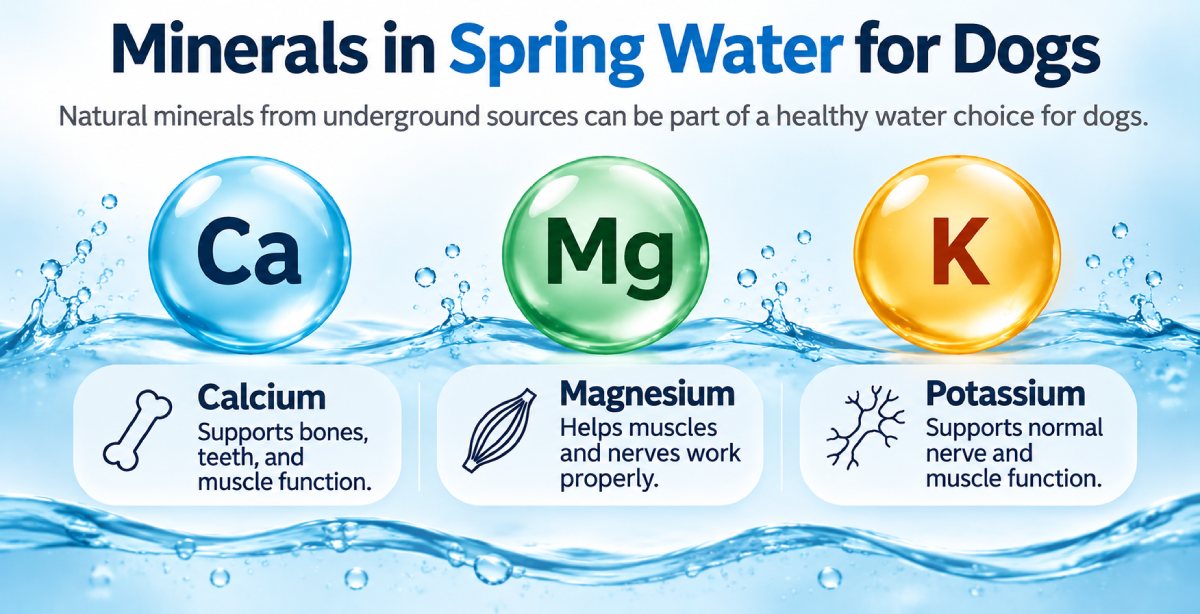
Spring water contains naturally occurring minerals, including calcium, magnesium, potassium, and sodium. These minerals enter the water as it moves through underground rock and soil.
Dogs need these minerals for normal body functions:
- Calcium supports bones, teeth, and muscle function.
- Magnesium helps muscles and nerves work properly.
- Potassium supports normal nerve and muscle function.
However, dogs usually get these nutrients from a balanced diet. The minerals in spring water do not necessarily provide extra health benefits. Their amounts also vary by water source, and higher mineral levels do not always mean healthier water.
Minerals in ordinary spring water are generally safe for healthy dogs. However, dogs with kidney disease, heart problems, or other medical conditions may need to limit certain minerals, such as sodium. A veterinarian can determine whether the mineral content of their drinking water matters.
What Is the Best Water for Dogs: Spring, Tap, Purified, or Filtered?
Spring water, tap water, purified water, and filtered water can all be suitable for dogs. The right choice depends on water quality, mineral content, and your dog’s health needs.
| Water Type | Benefits for Dogs | Potential Concerns | When to Choose It |
| Bottled spring water | Provides hydration and naturally occurring minerals. | Mineral levels vary by source. | When you want a commercially bottled drinking-water source with natural minerals. |
| Tap water | Provides everyday hydration when the local supply is safe. | Local water advisories or plumbing problems may affect quality. | When your municipal drinking water is safe and no restrictions apply. |
| Purified water | Undergoes treatment to reduce impurities and certain contaminants. | Mineral content varies by treatment method. | When you want treated bottled water or an alternative during a water-quality concern, provided the product is safe. |
| Filtered water | Can reduce chlorine, unwanted tastes, and certain contaminants. | Different filters remove different substances and require maintenance. | When a suitable filter addresses a known concern with your tap water. |
| Distilled water | Provides hydration with very little dissolved mineral content. | Offers no proven advantage for most healthy dogs. | When a veterinarian specifically recommends water with low mineral content. |
| Untreated spring or creek water | No established advantage over safe drinking water. | May contain harmful bacteria, parasites, or environmental contaminants. | Only when the water has been confirmed safe for drinking. |
For more information about household drinking-water options, compare spring water vs. filtered water.
How Much Water Should a Dog Drink Each Day?
A common guideline is approximately one fluid ounce of water per pound of body weight each day. The amount a dog needs varies with its diet, activity level, age, health, and environment.
The table below gives approximate daily amounts based on body weight.
| Dog Weight | Approximate Daily Water |
| 10 lb | 10 fl oz (about 300 mL) |
| 20 lb | 20 fl oz (about 590 mL) |
| 30 lb | 30 fl oz (about 890 mL) |
| 50 lb | 50 fl oz (about 1.48 L) |
| 75 lb | 75 fl oz (about 2.22 L) |
| 100 lb | 100 fl oz (about 2.96 L) |
These amounts are estimates, not strict limits. Dogs that exercise or spend time in warm weather may need more water. Dogs eating wet food also receive some of their daily water through meals.
Can Dogs Drink Water From Natural Springs and Streams?
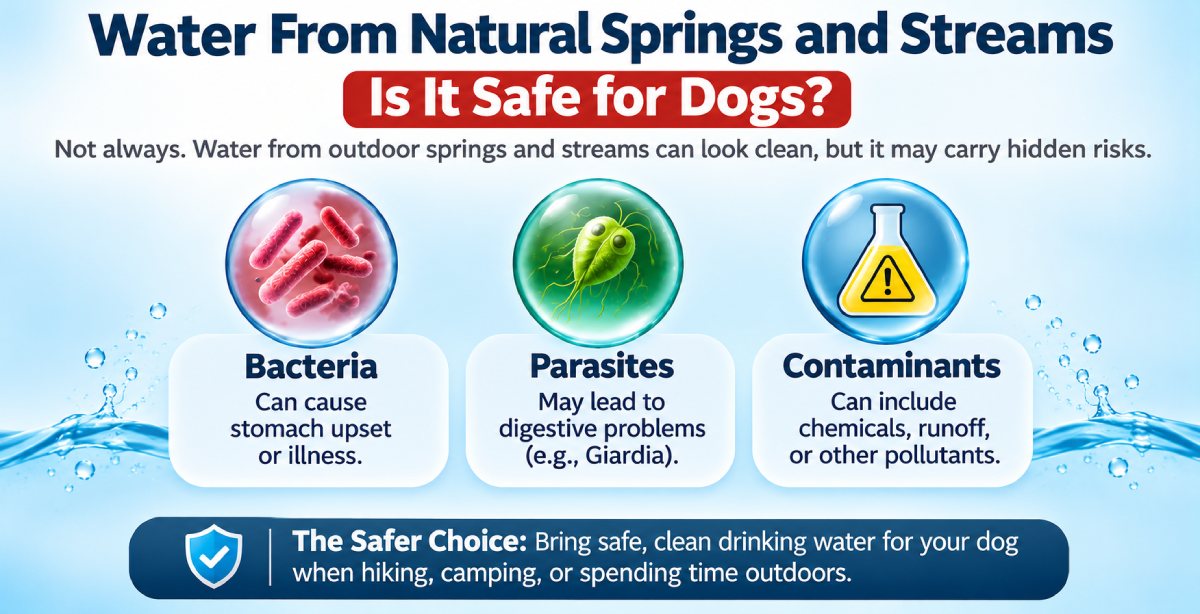
Dogs should not drink from untreated springs or streams unless the water is confirmed safe.
Outdoor water may contain germs, animal waste, or chemicals carried by runoff. Dogs can encounter these hazards while hiking, camping, swimming, or exploring wooded areas.
Giardia and Other Waterborne Germs
Giardia is a tiny parasite that can infect dogs when they swallow contaminated water.
It may be present in creeks, ponds, and other natural water sources. Infected dogs can develop diarrhea, stomach discomfort, and other digestive problems. If your dog develops diarrhea after possible exposure, contact your veterinarian. (CDC Giardia)
Leptospirosis and Contaminated Water
Leptospirosis is a bacterial infection that dogs can contract through water or soil contaminated with urine from infected animals. The bacterial infection can cause serious illness, including kidney or liver damage.
Possible symptoms include:
- Fever
- Vomiting
- Tiredness
- Loss of appetite
- Changes in urination
Harmful Algae in Lakes and Ponds
Blue-green algae (cyanobacteria) in lakes and ponds can produce toxins harmful to dogs. Some blooms form green or blue scum, but contaminated water may look normal. Dogs can swallow these toxins while drinking, swimming, or licking their wet fur. Keep your dog away from suspected blooms and seek immediate veterinary care if exposure occurs. This risk also applies to lakes and waterways in North Georgia. (Georgia EPD)
How to Give Your Dog Spring Water Safely at Home
You can store bottled spring water correctly and serve it in a clean bowl. A damaged container or poor storage conditions can affect water quality.
Follow these steps:
- Choose commercially bottled spring water intended for drinking.
- Check that the bottle or jug is sealed and undamaged.
- Store unopened water in a clean place away from direct heat and strong chemicals.
- Pour the water into a clean stainless-steel, ceramic, or other suitable pet bowl.
- Replace the drinking water regularly.
- Wash the bowl to remove saliva, food particles, and buildup.
- Keep the bowl somewhere your dog can reach easily.
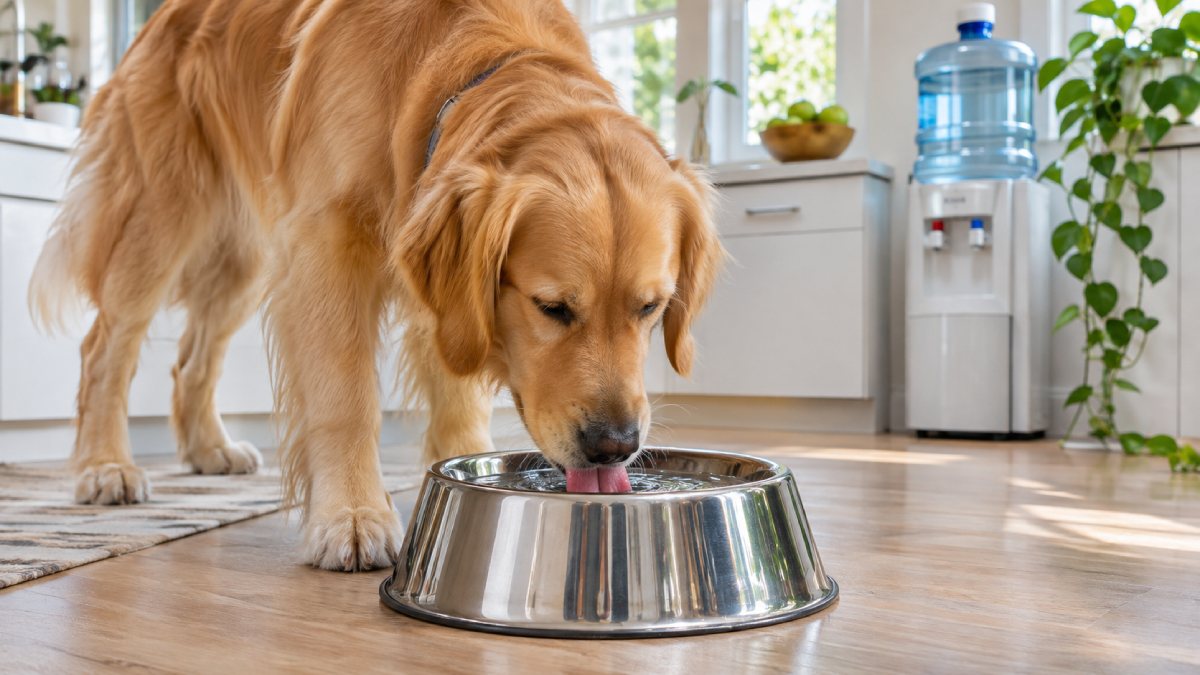
If you use a 5-gallon jug with a water cooler, you can fill your dog’s bowl from the cold or room-temperature dispenser. Never serve water from the hot-water spigot.
Can Dogs With Health Conditions Drink Spring Water?
Healthy dogs and puppies can generally drink commercially bottled spring water that is safe for human consumption. They need regular access to fresh, clean water as they grow.
Dogs with certain medical conditions may need more specific guidance. For example, dogs with kidney disease, urinary problems, or heart disease may follow prescribed diets that control certain nutrients. Their veterinarian can advise whether the mineral content of drinking water needs attention.
Do not switch to distilled water or restrict your dog’s drinking water as a medical treatment without veterinary guidance.
Let’s Recap
Can dogs drink spring water? Yes, commercially bottled spring water provides hydration and contains natural minerals that support normal body functions. However, untreated water from outdoor springs and streams may contain harmful bacteria, parasites, or other contaminants. Choose safe bottled spring water and always keep your dog’s drinking bowl clean and filled with fresh water.
Fresh Spring Water for Dogs in Gainesville, Murrayville, and North Georgia
At Inland Springs Water Pros, we deliver 5-gallon jugs of natural spring water in Gainesville, GA. If you are looking for the best spring water for dogs, our bottled spring water offers a convenient way to keep fresh drinking water available for your pets and family. We also clean and sanitize each reusable jug before it goes back out.
We deliver to homes and offices in Murrayville, Gainesville, Buford, Cumming, Flowery Branch, Dawsonville, Lula, Cleveland, Dahlonega, and Clermont.
Call us at 770-534-7873 or contact Inland Springs Water Pros to learn more about our spring water delivery service or request a quote.
Frequently Asked Questions
Can Dogs Drink Bottled Spring Water?
Yes, commercially bottled spring water is generally safe for healthy dogs when it meets drinking-water safety standards and is stored properly.
Can Dogs Drink Spring Water Every Day?
Yes, healthy dogs can drink safe bottled spring water every day. Its natural mineral content is generally suitable for daily use, with no need to switch between water types.
Can Dogs With Kidney Problems Drink Spring Water?
Some dogs with kidney problems can drink spring water, but their needs vary. A veterinarian can advise whether its mineral content is suitable.
Can Dogs Drink Alkaline Spring Water?
Yes, ordinary alkaline spring water is generally safe for healthy dogs when it meets drinking-water standards. Its higher pH offers no proven extra benefits.
Filtered Water vs Spring Water for Dogs: Which is Better?
Neither is automatically better for dogs. Filtered water can reduce specific impurities depending on the filter, while spring water naturally contains minerals. Both are suitable for most healthy dogs when safe to drink.
Is Spring Water or Purified Water Better for Dogs?
Neither is automatically better. Both are suitable for most healthy dogs when safe to drink. The main differences involve mineral content and treatment methods.
What Should I Do If My Dog Drinks Creek or Pond Water?
Your dog should be monitored for illness after drinking untreated water. A veterinarian should assess concerning symptoms or possible exposure to toxic algae.
Should Dogs Drink Cold or Room-Temperature Spring Water?
Dogs can generally drink cool or room-temperature spring water. Both are suitable as long as the water is comfortably drinkable and not hot.